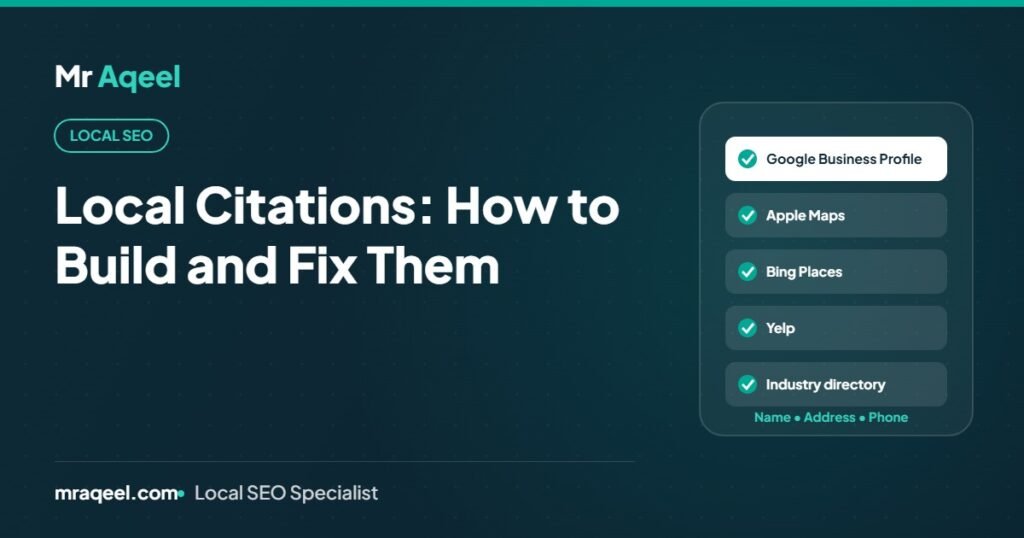
If you’ve ever looked up a business on Apple Maps, Yelp or an industry directory, you’ve seen a local citation. A citation is any online mention of your business’s name, address and phone number, often shortened to NAP. Google uses these mentions to check that your business is real, where it’s located and how established it is.
Citations won’t rank you on their own, but wrong or messy ones can quietly hold your rankings back. In this guide you’ll learn what citations are, why they matter and how to build and fix them the right way.
Why local citations matter
- Trust. When the same business details appear on many trusted websites, Google is more confident your business is legitimate and that your details are correct.
- Rankings. Consistent citations support your Google Business Profile and help you show up in the Map Pack and local results.
- Customers. People still find businesses through directories, maps apps and review sites. A wrong phone number means a lost call.
Structured vs unstructured citations
Structured citations are business listings on directories and platforms with set fields for your name, address, phone, website, hours and categories. Examples include Apple Maps, Bing Places, Yelp, Facebook and industry directories.
Unstructured citations are mentions of your business in normal content, such as a local news article, a blog post, an event page or a sponsor list. These are harder to get but can carry a lot of weight, especially when they come from well-known local or industry websites.
Step 1: Decide on your exact NAP
Before you build a single listing, decide exactly how your business details will appear and use that version everywhere. Small differences add up and confuse search engines.
- Name: your real business name, with no extra keywords or locations added.
- Address: choose one format (for example “Suite 4” or “Unit 4”, “Street” or “St”) and stick to it.
- Phone: one main local number. Avoid using different tracking numbers on different sites.
- Website: the same URL every time, including whether you use “www”.
Your Google Business Profile should be the master copy. Every other listing should match it exactly.
Step 2: Audit your existing citations
Most businesses already have citations they don’t know about, created by data providers or by old staff, or left over from a previous address or phone number. Search Google for your business name, your phone number and any old addresses, and note every listing you find.
Look for:
- Old addresses or phone numbers
- Misspelled or outdated business names
- Duplicate listings for the same location
- Wrong categories, hours or website links
Step 3: Fix and clean up
Claim the listings you can and update them to your exact NAP. Where you find duplicates, ask the platform to merge or remove them. Start with the most important sites first, as they influence the rest of the web. Many smaller directories copy their data from the bigger platforms.
Step 4: Build the core citations
Once your existing listings are clean, make sure you’re on the main platforms for your country. These usually include:
- Google Business Profile
- Apple Business Connect (Apple Maps)
- Bing Places for Business
- Facebook and other social profiles you actively use
- Yelp and major national business directories
Fill in every field: description, categories, hours, services, photos and website. A complete listing is more useful to customers and sends stronger signals to search engines.
Step 5: Add industry and local citations
General directories are just the start. The citations that often make the biggest difference are the ones that are relevant to your industry or your area:
- Industry directories: trade associations, professional bodies and niche platforms for your type of business (for example, healthcare, legal or home services directories).
- Local sources: your chamber of commerce, local business groups, council or community directories, and local event or sponsorship pages.
Quality matters more than quantity. Twenty accurate, relevant listings are worth more than hundreds of low-quality directory submissions.
Common citation mistakes to avoid
- Using a virtual office or PO box as your address
- Adding keywords to your business name on listings
- Changing your phone number or address without updating your citations
- Paying for bulk submissions to hundreds of spammy directories
- Creating a new listing instead of claiming an existing one, which causes duplicates
How long do citations take to work?
Some platforms update within days, while others can take several weeks to reflect changes. Search engines then need time to recrawl and trust the new information. Citation cleanup is usually a one-time project followed by small, ongoing additions, and it works best together with reviews, a strong local SEO website and an optimized Google Business Profile.
Want your citations done for you?
I can audit your existing listings, fix inconsistent details and build the right citations for your industry and area. Learn more about my local citations service, or get your free local SEO audit here.
